Introduction
Moisture is one of the biggest threats to product quality during storage, transportation, and long-term packaging. Whether you are dealing with food products, pharmaceuticals, electronics, leather goods, textiles, or industrial components, excess humidity can lead to mold growth, corrosion, unpleasant odors, reduced shelf life, and expensive product losses.
This is where silica gel desiccants play an important role. Silica gel is one of the most trusted moisture-absorbing solutions used worldwide to protect products from humidity. From small medicine bottles to large export cartons, silica gel helps maintain a dry environment inside sealed packaging and keeps products safe throughout their journey.
However, simply placing a silica gel sachet inside a package is not enough. To achieve the best results, it is important to understand how to use silica gel correctly, how much to use, where to place it, and which type is suitable for different applications.
In this comprehensive guide, you’ll learn everything about using silica gel effectively, its benefits, common mistakes to avoid, and how businesses can choose the right moisture protection solution for their products.
What is Silica Gel?
Silica gel is a highly porous form of silicon dioxide (SiO₂) that acts as a powerful desiccant by attracting and holding moisture from the surrounding air. Despite the word gel in its name, silica gel is actually a solid material made up of small transparent or white beads containing millions of microscopic pores.
These tiny pores provide a very large surface area, allowing silica gel to efficiently capture water vapor without changing its physical shape. Because of this property, silica gel is widely used to protect products from humidity, condensation, mold, rust, and moisture-related damage.
Silica gel is commonly available in several forms, including:
- White Non-Indicating Silica Gel
- Blue Indicating Silica Gel
- Orange Indicating Silica Gel
- Food Grade Silica Gel Sachets
- Industrial Silica Gel Packs
Today, silica gel is used across industries such as food processing, pharmaceuticals, electronics, automotive, textiles, leather goods, chemicals, and export packaging.
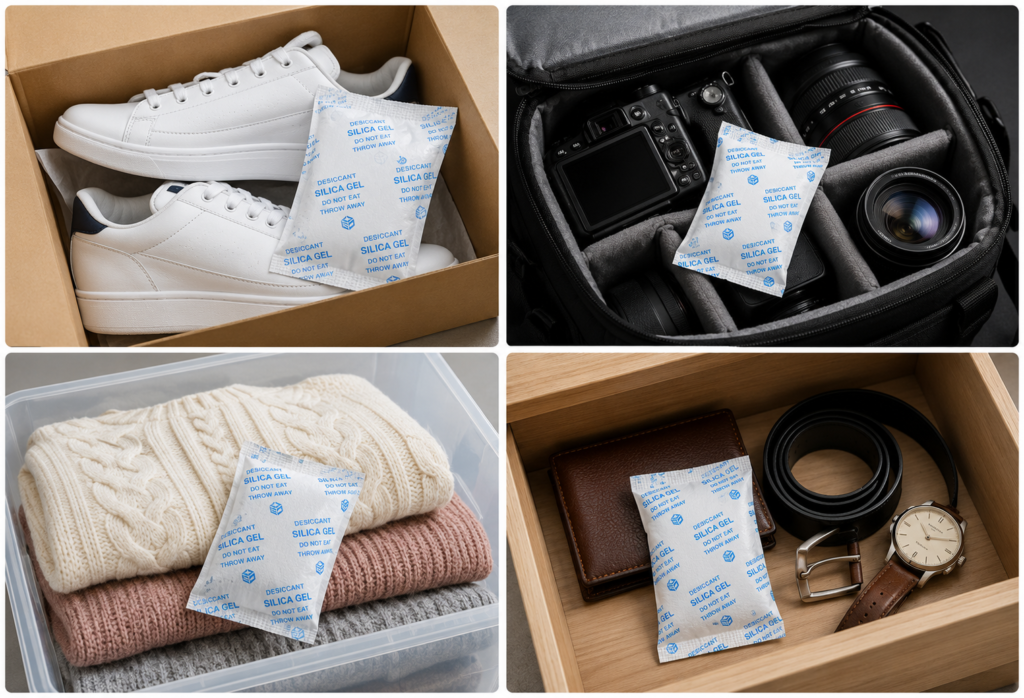
What are the applications of Silica Gel?
How Does Silica Gel Work?
Unlike materials that absorb water into their structure, silica gel works through a process called adsorption.
Adsorption means that water molecules stick to the surface of the silica gel beads rather than being absorbed inside them. Thanks to its microscopic pore structure, silica gel offers an extremely high surface area, enabling it to attract and retain a significant amount of moisture from the surrounding environment.
When placed inside sealed packaging, silica gel continuously removes excess humidity from the air. This helps create a dry atmosphere that protects products from moisture damage.
Benefits of this moisture control include:
- Prevents mold and mildew growth
- Protects metal parts from rust and corrosion
- Maintains product quality
- Extends shelf life
- Reduces moisture-related product failures
- Improves packaging performance during storage and transportation
This simple yet highly effective process makes silica gel one of the most reliable desiccants available for commercial and industrial applications.
How to Use Silica Gel Correctly
Using silica gel correctly is essential to achieve maximum moisture protection. Follow these best practices for the best results.
1. Always Use Silica Gel Inside Sealed Packaging
Silica gel works most effectively when it is placed inside airtight or well-sealed packaging. If the package is left open, the desiccant will absorb moisture from the surrounding environment instead of protecting the product.
Suitable packaging includes:
- Plastic pouches
- Stand-up zipper bags
- Glass jars
- Plastic containers
- Cartons
- Metal cans
- Export packaging boxes
A properly sealed package allows silica gel to control the internal humidity and protect the product for a much longer period.
2. Select the Right Silica Gel Sachet Size
Choosing the correct sachet size is equally important. Using too little silica gel may not provide sufficient moisture protection, while using an unnecessarily large quantity can increase packaging costs.
Typical applications include:
| Product Type | Suggested Sachet Size |
|---|---|
| Small Electronics | 1g – 2g |
| Medicine Bottles | 1g – 2g |
| Dry Food Products | 2g – 5g |
| Tea & Coffee | 5g – 10g |
| Leather Products | 5g – 10g |
| Industrial Components | 10g – 100g+ |
The ideal quantity depends on:
- Package size
- Product type
- Storage duration
- Humidity levels
- Transportation conditions
If you’re unsure about the correct size, consult a professional desiccant manufacturer for guidance.
3. Place the Sachet Properly
The silica gel sachet should be placed inside the package without damaging the product or obstructing its arrangement.
Do not:
- Open the sachet
- Cut the pouch
- Tear the packaging
- Scatter the beads directly inside the package
Always keep the silica gel sealed inside its original breathable sachet so it can safely adsorb moisture while remaining clean and easy to handle.
4. Seal the Package Immediately
Once exposed to air, silica gel immediately starts attracting moisture.
For maximum effectiveness:
- Place the sachet inside the package.
- Seal the package as quickly as possible.
- Avoid leaving filled packages open for long periods.
This ensures that the silica gel absorbs moisture from inside the package rather than from the surrounding environment.
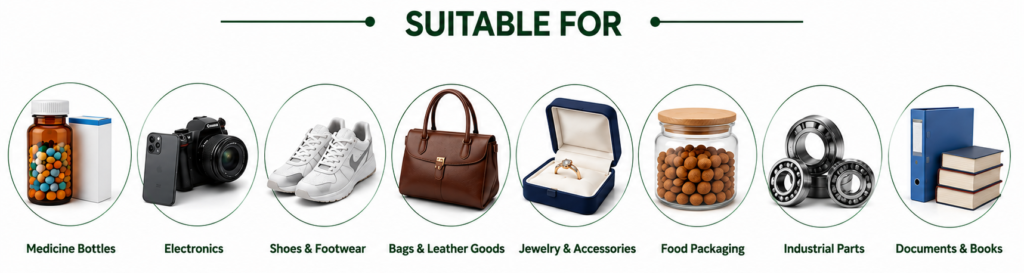
Applications of Silica Gel Across Industries
One of the biggest advantages of silica gel is its versatility. Today, almost every industry uses silica gel desiccants to prevent moisture-related damage and maintain product quality.
1. Food Packaging Industry
Moisture is one of the primary reasons food products lose freshness. Excess humidity can lead to mold growth, spoilage, unpleasant odors and reduced shelf life.
Food-grade silica gel helps maintain a dry environment inside sealed food packages, preserving product quality without coming into direct contact with the food.
Common applications include:
- Dry Fruits
- Spices
- Tea & Coffee
- Bakery Products
- Namkeen & Snacks
- Ready-to-Eat Foods
- Nutraceutical Products
Using the correct silica gel sachet improves shelf life while maintaining product freshness throughout storage and transportation.
2. Pharmaceutical Industry
Medicines and healthcare products are highly sensitive to moisture. Even small amounts of humidity can reduce their effectiveness.
Silica gel is widely used in:
- Tablet bottles
- Capsule containers
- Diagnostic kits
- Medical devices
- Nutraceutical packaging
By maintaining stable humidity levels, silica gel helps pharmaceutical companies comply with strict quality standards while protecting sensitive products.
3. Electronics Industry
Electronic components are vulnerable to moisture, especially during storage and shipping.
Silica gel helps prevent:
- Corrosion
- Short circuits
- Condensation
- Oxidation
- Moisture damage
It is commonly used for:
- Mobile Accessories
- Cameras
- Computer Components
- Printed Circuit Boards (PCBs)
- Industrial Electronics
- Electrical Equipment
4. Leather, Textile & Footwear Industry
Humidity can cause mold, mildew, discoloration and unpleasant odors in leather goods and garments.
Silica gel sachets are widely used inside:
- Shoe boxes
- Handbags
- Leather Jackets
- Garment Packaging
- Textile Storage
This helps maintain product quality during warehousing and transportation.
5. Export Packaging
International shipments often experience sudden temperature changes during sea transportation.
This creates condensation inside containers, commonly known as Container Rain, which can damage valuable cargo.
Silica gel helps reduce moisture inside export cartons and packaging, protecting products during long-distance shipping.
For complete container protection, many exporters also use Container Desiccants to control humidity throughout the container.
Common Mistakes to Avoid While Using Silica Gel
Even high-quality silica gel may not provide proper protection if used incorrectly.
Avoid these common mistakes:
Using Too Little Silica Gel
Insufficient desiccant cannot effectively control moisture inside larger packages.
Leaving Packages Open
Silica gel immediately starts adsorbing moisture from the surrounding air. Always seal packages immediately after placing the sachet inside.
Using Damaged Sachets
Never use torn or damaged silica gel pouches. Replace them immediately.
Selecting the Wrong Sachet Size
Different products require different desiccant quantities.
Consult a trusted Silica Gel Manufacturer to determine the appropriate sachet size.
Reusing Saturated Silica Gel Without Proper Regeneration
Although some silica gel can be regenerated under controlled conditions, heavily saturated or contaminated sachets should be replaced.
Benefits of Using High-Quality Silica Gel
choosing premium-quality silica gel offers significant long-term advantages.
Superior Moisture Adsorption
High-quality silica gel absorbs moisture more efficiently, providing longer-lasting protection.
Extended Shelf Life
Maintains product freshness and quality by controlling humidity.
Product Safety
Protects against:
- Mold
- Rust
- Corrosion
- Moisture Damage
- Bad Odors
Cost Savings
Reducing product damage means fewer returns, less wastage and lower replacement costs.
Suitable for Multiple Industries
Silica gel is ideal for:
- Food Packaging
- Pharmaceuticals
- Electronics
- Automotive
- Textile
- Leather
- Chemicals
- Industrial Packaging
- Export Shipments
Why Businesses Choose EcoFreshGuard
Selecting the right desiccant supplier is just as important as selecting the right product.
At EcoFreshGuard, we manufacture reliable moisture protection solutions designed for industrial and commercial applications.
Our product range includes:
- Food Grade Silica Gel
- White Non-Indicating Silica Gel
- Blue & Orange Indicating Silica Gel
- Oxygen Absorbers
- Container Desiccants
- Clay Desiccants
- Ethylene Absorbers
We also provide:
- OEM & Private Label Manufacturing
- Custom Printed Desiccant Sachets
- Bulk Supply
- Export Packaging Solutions
- Technical Product Guidance
Our moisture protection solutions are trusted by businesses across the food, pharmaceutical, electronics, textile and industrial sectors.
Frequently Asked Questions (FAQs)
1. What is silica gel used for?
Silica gel is used to absorb excess moisture and protect products from humidity, mold, corrosion, rust and spoilage. It is widely used in food packaging, pharmaceuticals, electronics, leather goods, textiles and export packaging.
2. Can silica gel be used with food?
Yes. Food-grade silica gel sachets are specifically designed for food packaging applications. However, the sachets should never be opened or consumed.
3. How long does silica gel last?
The lifespan of silica gel depends on humidity levels, package size and storage conditions. In a properly sealed package, silica gel remains effective much longer than in an open environment.
4. Can silica gel be reused?
Some silica gel types can be regenerated by controlled heating to remove absorbed moisture. However, for critical packaging applications, replacing the sachet is generally recommended to ensure reliable performance.
5. How much silica gel should I use?
The required quantity depends on:
- Package volume
- Product type
- Storage duration
- Humidity conditions
Consulting a professional silica gel manufacturer helps determine the correct sachet size for your application.
6. Is silica gel safe?
Silica gel is generally considered safe for packaging applications when used correctly. It should never be eaten and should always remain inside its original sachet.
7. Which industries use silica gel?
Silica gel is commonly used in:
- Food & Beverage
- Pharmaceuticals
- Electronics
- Automotive
- Leather & Footwear
- Textile
- Chemical Industry
- Export Packaging
- Industrial Manufacturing
Conclusion
Silica gel is one of the most effective and economical moisture protection solutions available today. Whether you’re packaging food products, medicines, electronics or industrial components, using the correct silica gel sachet helps prevent moisture damage, extends shelf life and improves overall product quality.
To achieve the best results, always choose the correct sachet size, use airtight packaging and source your desiccants from a trusted manufacturer.
If your business requires food-grade silica gel, industrial desiccants, container desiccants or OEM moisture protection solutions, selecting a reliable manufacturing partner ensures consistent quality, better product protection and dependable supply.
Why Choose EcoFreshGuard?
At EcoFreshGuard, we specialize in manufacturing high-quality moisture protection solutions for businesses across India.
We Offer:
✔ Food Grade Silica Gel Desiccants
✔ White & Indicating Silica Gel
✔ Oxygen Absorbers
✔ Container Desiccants
✔ Clay Desiccants
✔ Ethylene Absorbers
✔ OEM & Private Label Manufacturing
✔ Custom Printed Desiccant Sachets
✔ Bulk Supply Across India
✔ Export-Ready Packaging Solutions
Whether you’re a food manufacturer, pharmaceutical company, exporter or industrial business, our team can help you choose the right moisture protection solution for your products.